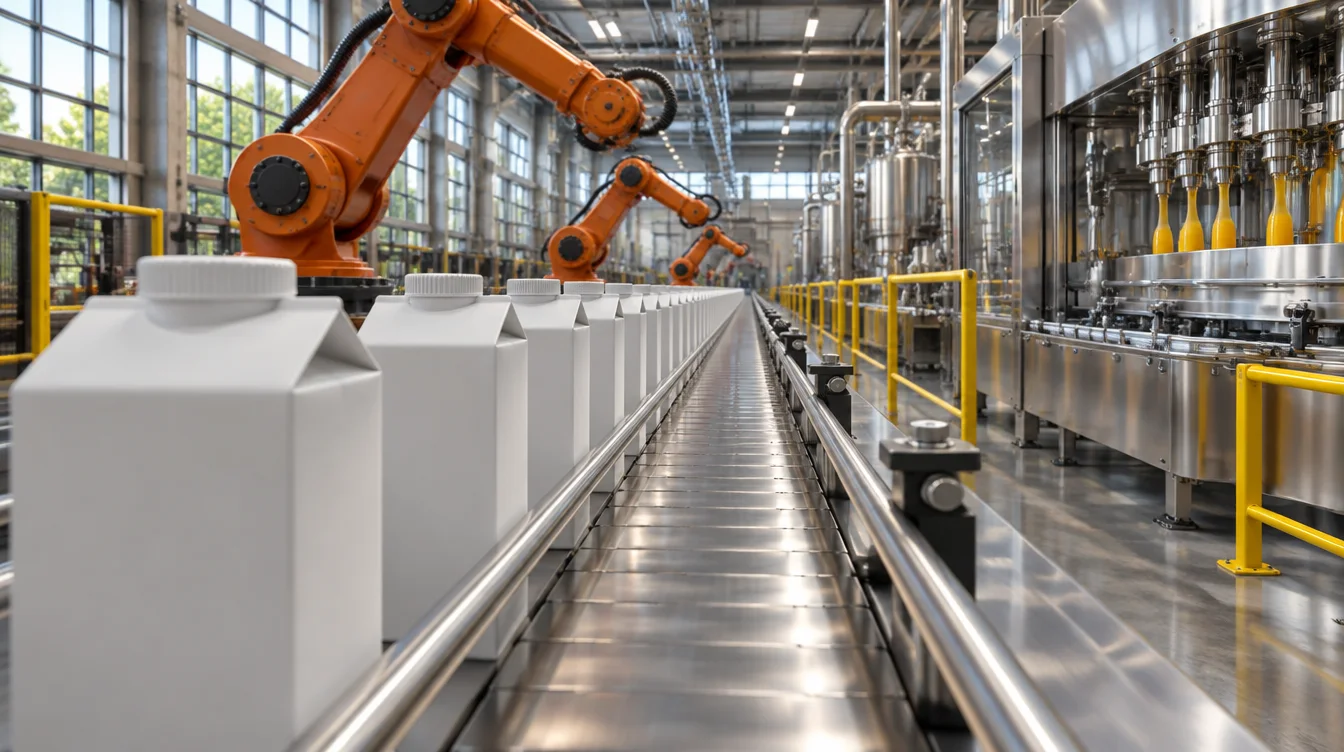
A line is a chain
I led an improvement team on two production lines, one in Texas and one in California. Each machine on a line feeds the next, so when one stops, product backs up behind it and every machine after it runs out of work. The whole line loses that time, which is what downtime means.
Finding where the time goes
Before fixing anything, you need to know which stops cost the most. Log every stop by machine and the time rarely spreads evenly, because one spot usually loses far more than the rest. That spot is the bottleneck, and a fix there pays back first.
A mechanical fix at the worst spot
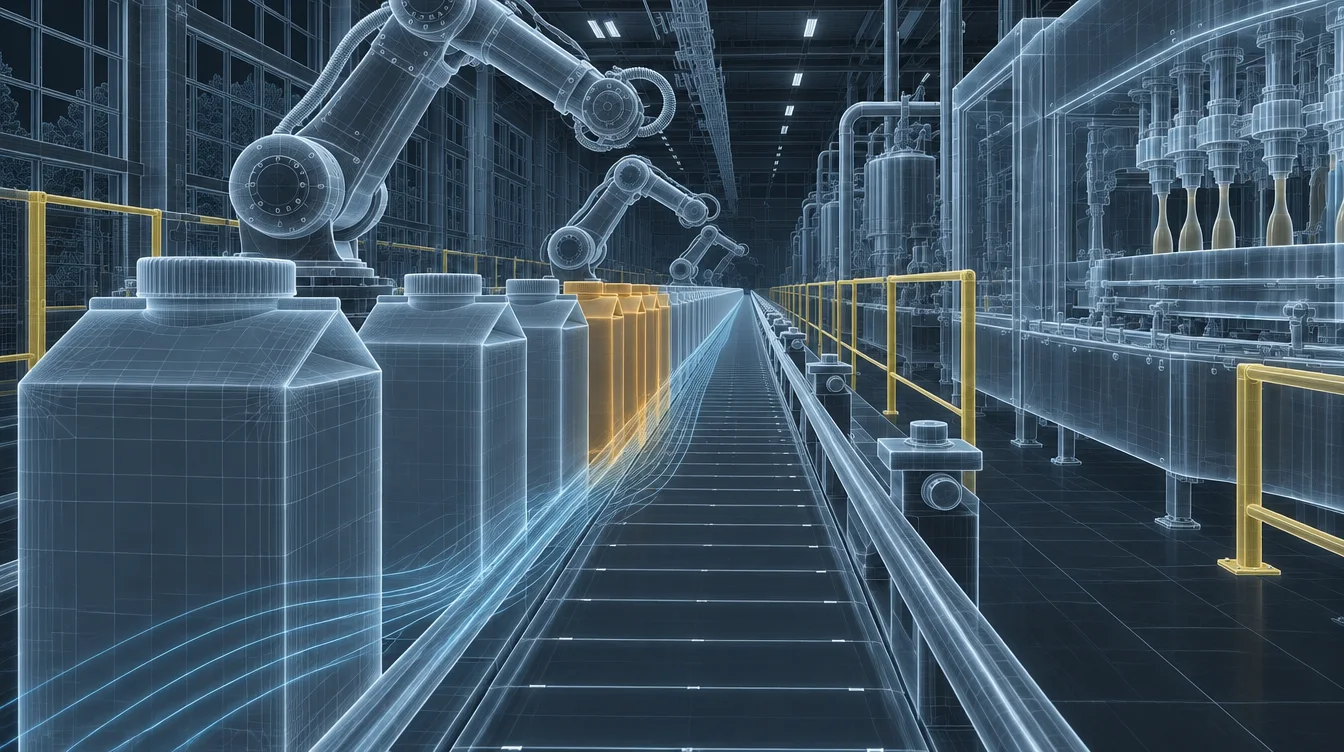
Some of our fixes were mechanical changes to the lines themselves. A change at the bottleneck helps the whole line, since every machine after it gets a steady feed again. The part swapped in this drawing is a stand-in for the real ones.
A written way to run the line
The other half of the fix was written standard procedures for the crews who ran the lines. A standard procedure puts the steps on paper, so every crew runs the line and restarts it after a stop the same way.
35% less downtime on both lines
In 8 weeks we cut downtime on both lines by 35%, in Texas and in California. That’s time each line now spends making product, and it came from the machine changes and the written procedures together.
As an engineering consultant I led an improvement team on two production lines, in Texas and California.
The first talk I made for Sketch Deck, about putting AI on a business’s bottleneck, comes out of this work.